
Dubrovnik to Korčula: Sailing Southern Dalmatia
Walled Cities, Forested Islands and Southern Adriatic Elegance
Southern Dalmatia has a quieter, more historic rhythm than the central Dalmatian islands. Where Split, Hvar and Vis bring a classic sense of Croatian island-hopping, the coast around Dubrovnik feels more cinematic, more reflective and, at times, more serene.
This is a sailing region shaped by walled cities, forested islands, sheltered bays and old stone harbours. Dubrovnik provides one of the Mediterranean’s most memorable points of departure, while Mljet, Korčula and the Elaphiti Islands reveal a softer side of Croatia — green, atmospheric and deeply connected to the sea.
For guests seeking a Southern Dalmatia sailing itinerary, the appeal lies in the balance: cultural depth, relaxed passages, clear Adriatic water and evenings ashore in places where history, wine and island hospitality meet naturally.
Dubrovnik: A Dramatic Beginning
Few sailing journeys begin with such a powerful sense of place.
Dubrovnik rises above the Adriatic in pale stone and terracotta, its medieval walls enclosing marble streets, baroque churches, quiet courtyards and lively cafés. Beginning a voyage here gives the journey an immediate sense of occasion.
There is grandeur in Dubrovnik, but also intimacy. Early morning walks along the city walls, shaded side streets, harbour views and long lunches within the old town all create a memorable prelude to the sailing ahead.
For many guests, Dubrovnik is not simply an embarkation point. It is part of the experience: a historic threshold between the land-based world and the slower rhythm of life by sea.
Mljet: Forested Calm and Island Stillness
From Dubrovnik, the route opens towards Mljet — one of Croatia’s most quietly beautiful islands.
Mljet feels different from the more polished harbour towns of the Adriatic. Much of its appeal lies in landscape: pine forests, green hills, saltwater lakes, sheltered anchorages and villages that seem to sit lightly on the shoreline. It is an island of calm rather than spectacle.
Okuklje, on the northern shore, offers a gentle first pause. Sheltered by hills and traditional stone houses, it has the easy simplicity that makes sailing feel so restorative: calm water, quiet walks, a konoba dinner and the sense of having stepped away from the busier world.
Pomena brings another dimension. As a gateway to Mljet National Park, it offers access to Veliko and Malo Jezero, the island’s celebrated saltwater lakes, where forest trails, kayaking, cycling and Benedictine ruins give the day a natural cultural focus.
This is Southern Dalmatia at its most peaceful: green, spacious and beautifully unhurried.
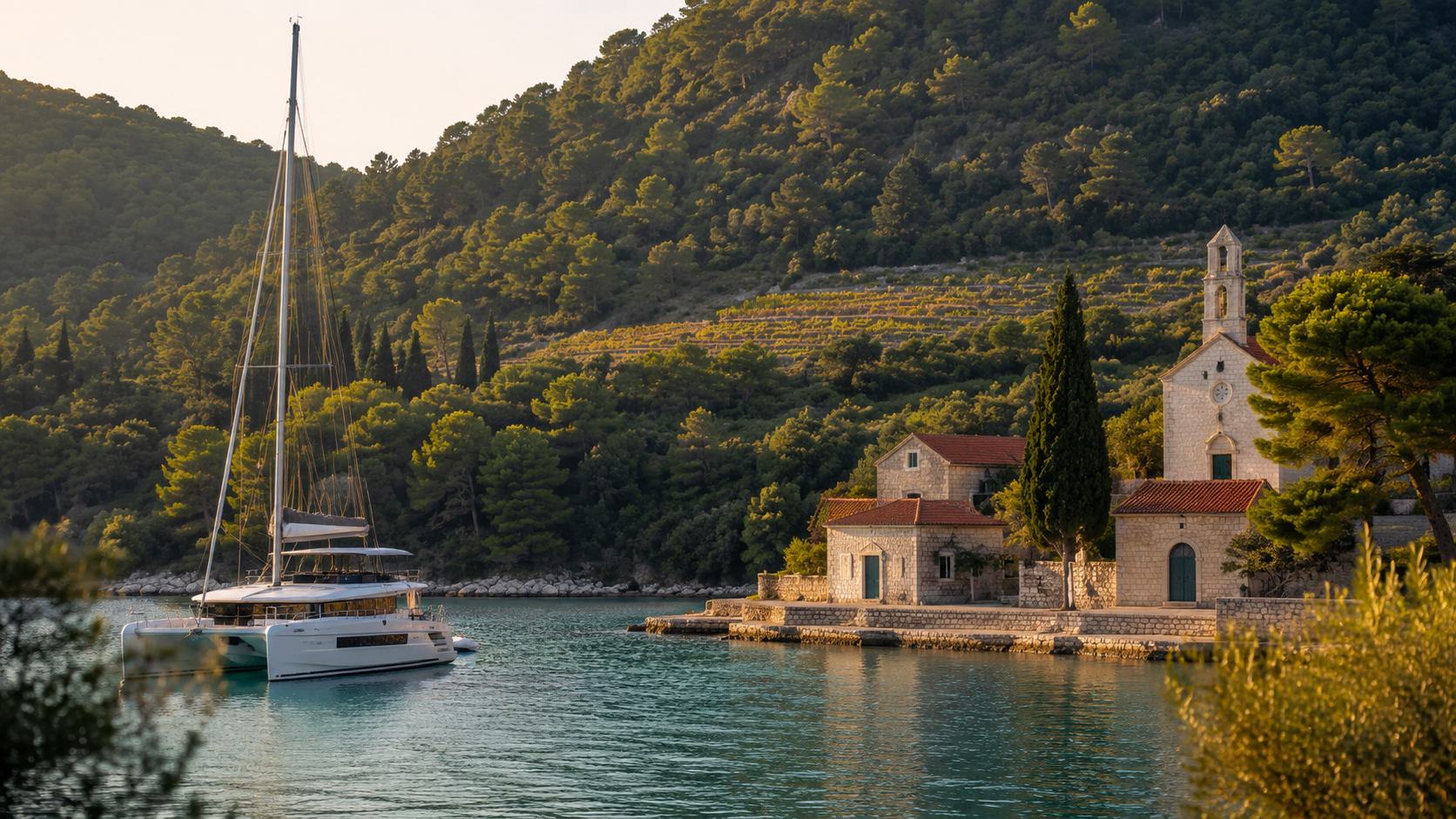
Southern Dalmatia’s quieter islands bring a softer rhythm of forested bays, stone harbours and calm Adriatic water.
Korčula: Wine, Stone and Venetian Character
Korčula adds a richer, more architectural mood to the journey.
Often described as a smaller echo of Dubrovnik, Korčula Town is enclosed by medieval walls and arranged around narrow stone lanes, red rooftops and Venetian towers. It is elegant without feeling overstated, atmospheric without being overwhelming.
The island is also known for wine. Local varietals such as Pošip and Grk give Korčula a strong culinary identity, especially when paired with harbourfront dining, seafood, olive oil and warm evenings in old-town squares.
For a boutique sailing itinerary, Korčula works beautifully because it offers both cultural texture and relaxed pleasure. One can wander the town, visit a cellar, dine beside the sea, and still feel that the day has unfolded naturally rather than formally.
It is one of the great strengths of Southern Dalmatia: history is never far away, but nor is the simple joy of being by the water.
Hidden Bays and Quieter Island Life
One of the pleasures of sailing Southern Dalmatia is the way the itinerary moves between recognised names and quieter pauses.
Prožura, on Mljet, is a good example. It is not a grand destination, and that is precisely its charm. Olive groves, turquoise water, pine-shaded paths and family-run konobas create a softer island atmosphere — more intimate, more local, more reflective.
These quieter stops matter. They prevent the journey from becoming simply a sequence of famous places. Instead, the route develops a natural rhythm: Dubrovnik’s grandeur, Mljet’s stillness, Korčula’s wine and stone, then smaller bays where the Adriatic feels wonderfully close.
In this sense, Southern Dalmatia is especially well suited to guests who enjoy depth and understatement. It is not about rushing from highlight to highlight. It is about allowing each place to breathe.
Šipan and the Elaphiti Islands
The return towards Dubrovnik brings the Elaphiti Islands into focus.
Šipan, the largest of the group, has long been associated with Dubrovnik’s old nobility, and traces of that heritage remain in its villas, churches, gardens and quiet waterfronts. Šipanska Luka offers a graceful final island pause, with a palm-lined harbour, local wines, olive oil and a slower rhythm that feels far removed from the busier mainland.
For a final evening before returning to Dubrovnik, it has exactly the right tone: relaxed, elegant and gently nostalgic.
The Elaphiti Islands bring the itinerary full circle. After the drama of Dubrovnik, the calm of Mljet and the cultural richness of Korčula, they offer a softer close — island life at a human scale, framed by the Adriatic light.
Why Choose Southern Dalmatia?
Southern Dalmatia is ideal for guests who want a Croatian sailing experience with a strong sense of history, landscape and quiet atmosphere.
It is less about glamour than the central Dalmatian route around Hvar, and less remote than the wilder Kornati Islands. Its appeal lies somewhere beautifully between the two: historic, green, cultured and serene.
Choose Southern Dalmatia if you are drawn to Dubrovnik’s walled old town, Mljet’s forests and saltwater lakes, Korčula’s Venetian character and island wines, the quieter rhythm of Šipan and the Elaphiti Islands, and relaxed Adriatic sailing with a strong cultural heart.
For guests who want Croatia to feel timeless rather than hurried, Southern Dalmatia is especially compelling.
Sailing Southern Dalmatia with Elysian
Elysian Sailing’s Southern Dalmatia itinerary is designed around the quiet elegance of this part of Croatia.
The route begins and ends in Dubrovnik, then moves through Mljet, Korčula, Prožura and Šipan — a sequence of places that combines cultural richness, forested calm, old harbours and relaxed days aboard one of our modern crewed yachts. The itinerary is around 100 nautical miles, with average daily sailing of approximately 2–3 hours, giving the journey a comfortable, unhurried rhythm.
The pleasure is not only in where the yacht goes, but in how the journey feels: breakfast on deck, a gentle passage across clear Adriatic water, time to swim or explore, and evenings ashore where wine, seafood and old stone towns give the day its natural close.
For those seeking a more refined Croatian sailing holiday, Southern Dalmatia offers something quietly memorable — a voyage shaped by Dubrovnik, Mljet, Korčula and the timeless poetry of the Adriatic.
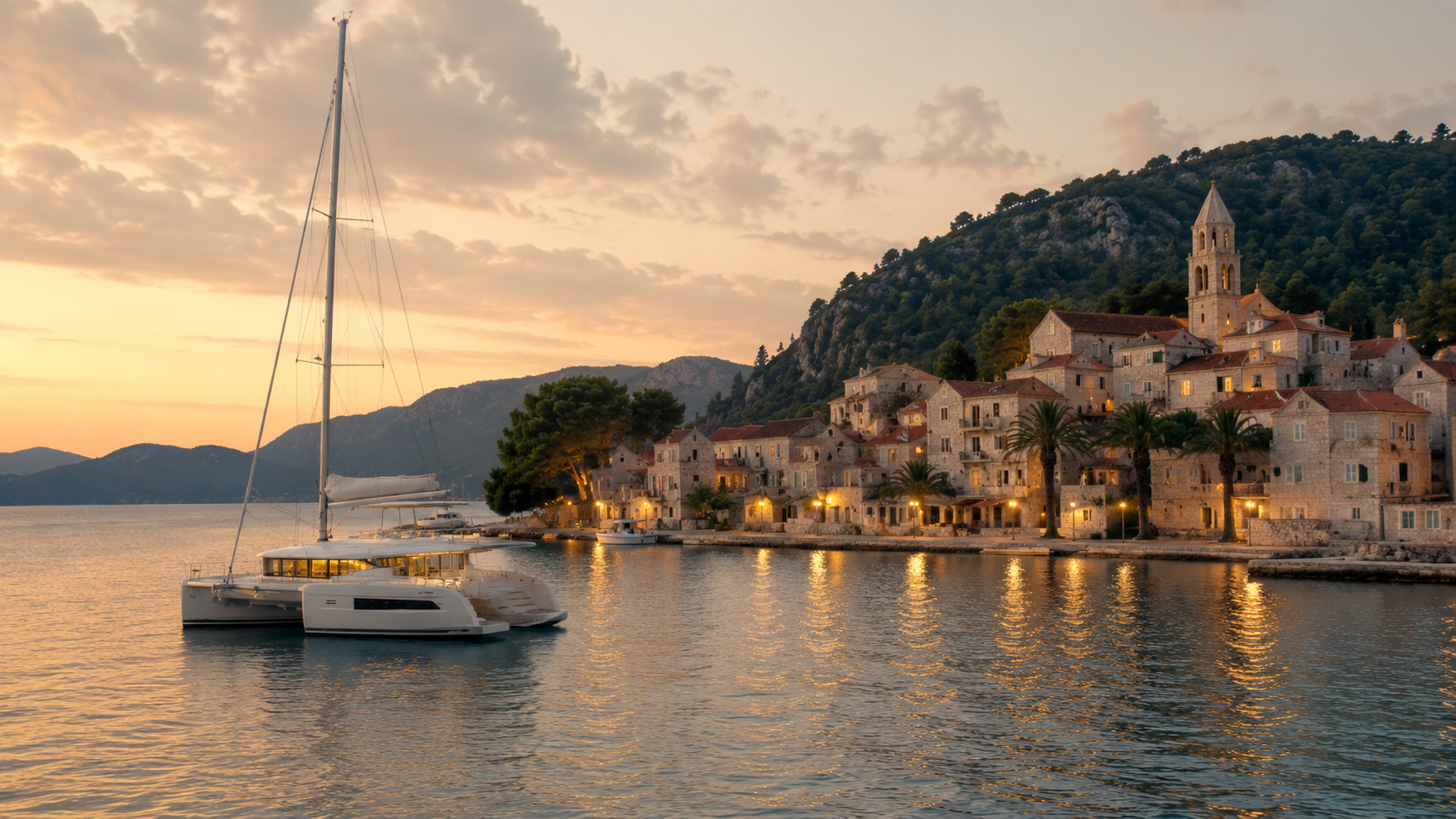
As evening settles over the Adriatic, Southern Dalmatia reveals its most graceful side — quiet harbours, old stone towns and life shaped by the sea.
Continue Exploring Croatia
Discover more Elysian Insights on sailing the coastlines, islands, culture and cuisine of Croatia.
Dubrovnik to Korčula: Sailing Southern Dalmatia (this Insight)