
Croatia Ashore | Food, Wine & Island Culture
Stone Harbours, Island Wines and the Warmth of Dalmatian Life
Sailing in Croatia is one of the Mediterranean’s great pleasures, but its appeal extends far beyond the water. Along the Dalmatian coast, each harbour, island and old stone town brings its own rhythm — shaped by centuries of seafaring, Venetian influence, local food traditions and the easy pleasures of life beside the Adriatic.
A sailing holiday in Croatia is not only about moving from bay to bay. It is about stepping ashore in the late afternoon, wandering through limestone streets, finding a quiet table by the water, and letting the evening unfold around grilled fish, local wine and the gentle sound of boats at rest.
From Split and Hvar to Korčula, Vis, Zadar and the quieter islands of Northern Dalmatia, Croatia offers a cultural and culinary journey that feels relaxed, authentic and beautifully suited to life under sail.
A Coast Shaped by History
Croatia’s coastline carries a rich and layered history. Roman foundations, Venetian walls, medieval churches, stone bell towers and old harbour fronts all form part of the sailing experience. Many of the most memorable cultural moments happen almost incidentally — arriving by sea, walking into an old town, and discovering how closely architecture, landscape and maritime life are woven together.
In Split, Diocletian’s Palace gives the city an extraordinary sense of depth, with everyday cafés, shops and courtyards set within ancient Roman walls. In Hvar and Korčula, Venetian influence appears in elegant façades, narrow lanes and graceful waterfronts. Further north, Zadar offers Roman ruins, quiet churches and a more understated cultural rhythm.
This is one of Croatia’s great strengths as a sailing destination: culture is not confined to formal sightseeing. It is present in the harbours, quays, markets, churches, squares and evening promenades that naturally shape each day ashore.
Island Life and the Rhythm of the Adriatic
Sailing reveals Croatia at a different pace. By yacht, the islands are not a sequence of destinations to be hurried through, but a changing pattern of landscapes, anchorages and small communities.
Some islands feel lively and social, with elegant waterfronts, restaurants and evening promenades. Others are quieter and more remote, shaped by pine-covered hills, dry stone walls, vineyards, olive groves and clear water. This variety gives Croatia its particular richness: one day may bring a historic town and a refined dinner ashore; the next, a peaceful anchorage and a simple meal close to the sea.
The rhythm is gentle but varied. Mornings are for swimming, sailing and quiet passages between islands. Afternoons invite exploration ashore. Evenings are often the most memorable part of the day — when the heat softens, harbour lights appear, and the coastline takes on a warmer, more intimate character.
The Pleasure of Dining Ashore
Dining ashore is one of the quiet joys of sailing Croatia. The best meals are often simple, seasonal and deeply connected to place: grilled fish, octopus salad, black risotto, lamb, shellfish, olive oil, local vegetables and herbs gathered from the dry island landscape.
Along the coast and islands, traditional konobas offer a relaxed form of hospitality — informal, generous and often set close to the water. Some are reached from small harbours or anchorages, while others sit within old towns or tucked-away villages. The atmosphere is rarely hurried. A meal may begin with a glass of local wine, continue with seafood or slow-cooked meat, and end with fruit, dessert wine or a quiet walk back along the quay.
For Elysian guests, dining ashore is not about seeking formality. It is about atmosphere, setting and authenticity — the pleasure of finding the right table at the right moment, with the yacht resting nearby and the Adriatic turning silver in the evening light.
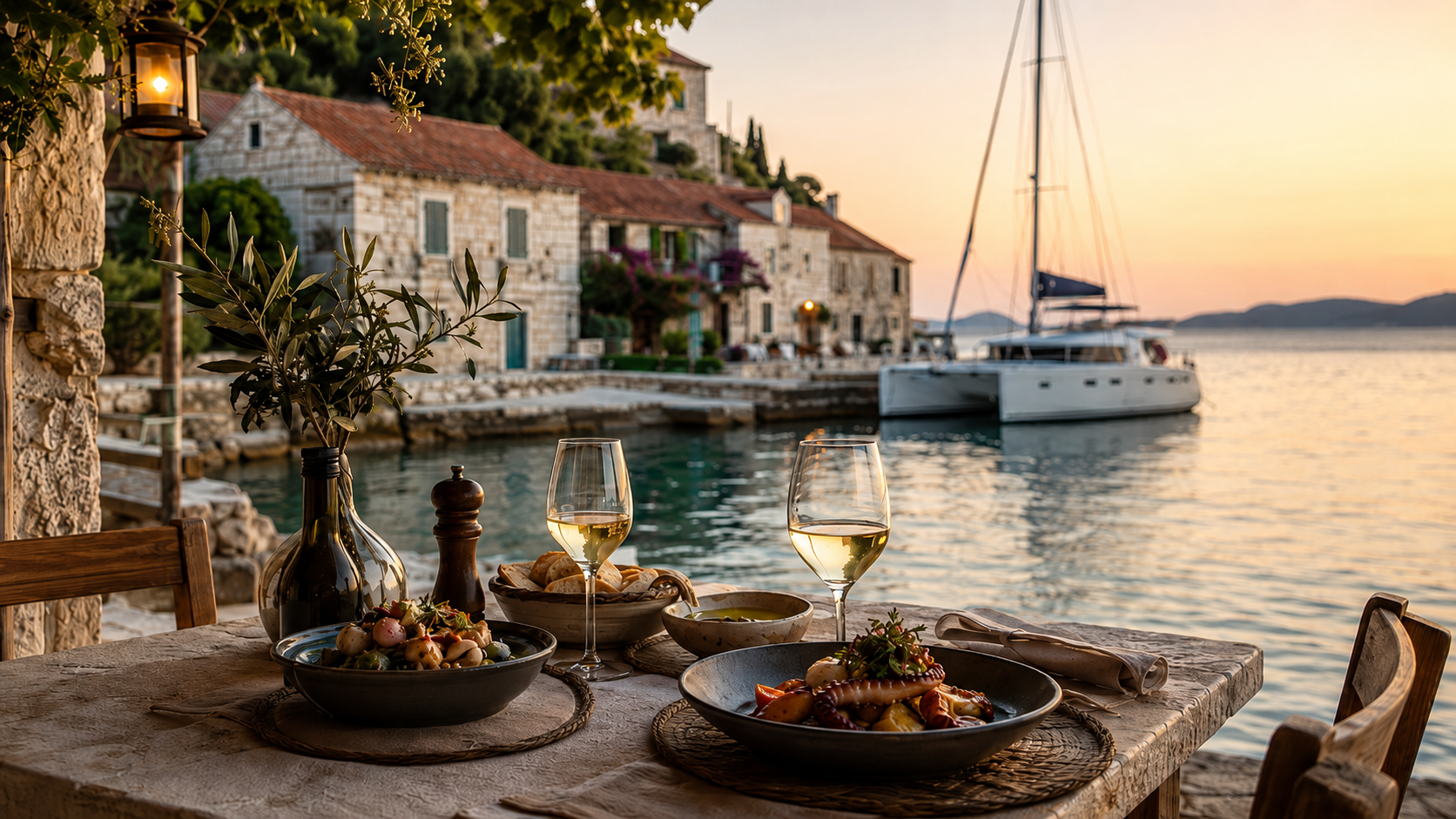
Dining ashore in Croatia is shaped by simple ingredients, harbour light and the quiet rhythm of island life.
Seafood, Olive Oil and Island Produce
Croatian coastal cuisine is shaped by the sea and by the land immediately beside it. Fish and shellfish are central, but so too are olive oil, herbs, figs, capers, citrus, vegetables, cheeses and local wines.
On the islands, food often reflects a balance between abundance and simplicity. Menus may be short, but ingredients are usually fresh and direct. Grilled sea bream or sea bass, scampi, mussels, octopus, cuttlefish risotto and simple salads appear frequently, supported by olive oil, bread and wine.
In parts of Dalmatia, lamb is also important, especially where island grazing and aromatic herbs influence the flavour. Inland influences sometimes appear too, adding another layer to the coastal table.
What makes Croatian dining especially appealing while sailing is the way food and setting work together. A simple dish can feel exceptional when served beside a quiet harbour, under a stone archway, or on a terrace overlooking the water.
Wine and the Dalmatian Coast
Croatia’s wine culture is one of the pleasures of travelling here slowly. Along the Dalmatian coast and islands, vineyards have long been part of the landscape, often planted on slopes, terraces or stony ground close to the sea.
White wines are especially well suited to warm sailing days and seafood dinners, while fuller reds pair beautifully with lamb, grilled meats and richer island dishes. On islands such as Korčula and Hvar, wine is woven into the cultural identity of the place, creating natural opportunities for tastings, vineyard visits or simply choosing a local bottle with dinner.
For many guests, Croatian wine is a quiet discovery. It may not be as internationally familiar as French or Italian wine, but it often becomes one of the memorable pleasures of the journey — local, characterful and perfectly matched to the coastline.
Split, Hvar and Central Dalmatia
Central Dalmatia offers Croatia at its most varied and sociable. Split provides a remarkable cultural opening, with ancient architecture, waterfront life and the sense of a city shaped by both history and the sea. From there, the islands introduce a changing rhythm of elegance, energy and quiet escape.
Hvar brings glamour, lavender hills, Venetian architecture and refined waterfront dining. Vis feels more remote and quietly atmospheric, with fishing traditions, clear bays and a slower pace. Brač offers stone villages, beaches, vineyards and relaxed island life.
For guests who enjoy a balance of culture, dining and classic island-hopping, this part of Croatia is especially rewarding.
Dubrovnik, Korčula and Southern Dalmatia
Southern Dalmatia has a more romantic and historic character. Dubrovnik brings drama, beauty and a powerful sense of arrival, with its old walls rising above the sea. Sailing north towards Mljet, the Elaphiti Islands and Korčula reveals a softer rhythm: forested landscapes, sheltered bays, stone villages and quiet evenings ashore.
Korčula is one of Croatia’s great cultural and culinary stops. Its old town is intimate and atmospheric, with narrow lanes, sea views and a strong wine tradition. Mljet offers a different kind of richness, with national park landscapes, saltwater lakes and a deep sense of calm.
This region is particularly well suited to guests who enjoy history, wine, natural beauty and a more romantic sailing atmosphere.
Zadar, Kornati and Northern Dalmatia
Northern Dalmatia is quieter, more spacious and more elemental. Zadar provides a graceful cultural starting point, with Roman remains, Venetian walls and a gentler rhythm than some of Croatia’s busier coastal cities.
Beyond Zadar, the islands become increasingly still. Dugi Otok, Telašćica and the Kornati islands offer pale stone landscapes, sheltered water, remote anchorages and an almost sculptural beauty. Dining here often feels more understated: small harbours, simple konobas, local fish, olive oil and warm evening light.
For travellers drawn to nature, stillness and less crowded island life, Northern Dalmatia offers a deeply restorative version of Croatia.
Culture Without Formality
One of the reasons Croatia works so well as a boutique sailing destination is that its cultural richness does not require a formal itinerary. Guests can enjoy museums, churches, historic sites and guided experiences where desired, but much of the pleasure comes through everyday discovery.
A morning market, a small chapel, an old harbour wall, a village square, a family-run restaurant, a glass of wine by the water — these are the moments that give a sailing holiday its texture.
This suits the Elysian approach particularly well. The experience is curated, but never over-scheduled. There is room for spontaneity, quiet exploration and the gentle luxury of choosing how each day should unfold.
Sailing Croatia with Elysian
An Elysian sailing holiday in Croatia is designed around comfort, atmosphere and a deeper sense of place, with each journey shaped by The Elysian Experience. With modern crewed yachts, carefully paced itineraries and opportunities to explore culture and cuisine ashore, the journey combines the freedom of sailing with the pleasures of thoughtful travel.
Whether following the sunlit islands of central Dalmatia, the historic coastline from Dubrovnik to Korčula, or the quieter anchorages of Northern Dalmatia, Croatia offers a richly textured sailing experience — one shaped by sea, stone, food, wine and light.
For guests who value beauty without hurry, dining without formality and culture woven naturally into each day, Croatia is one of the Mediterranean’s most rewarding places to sail.
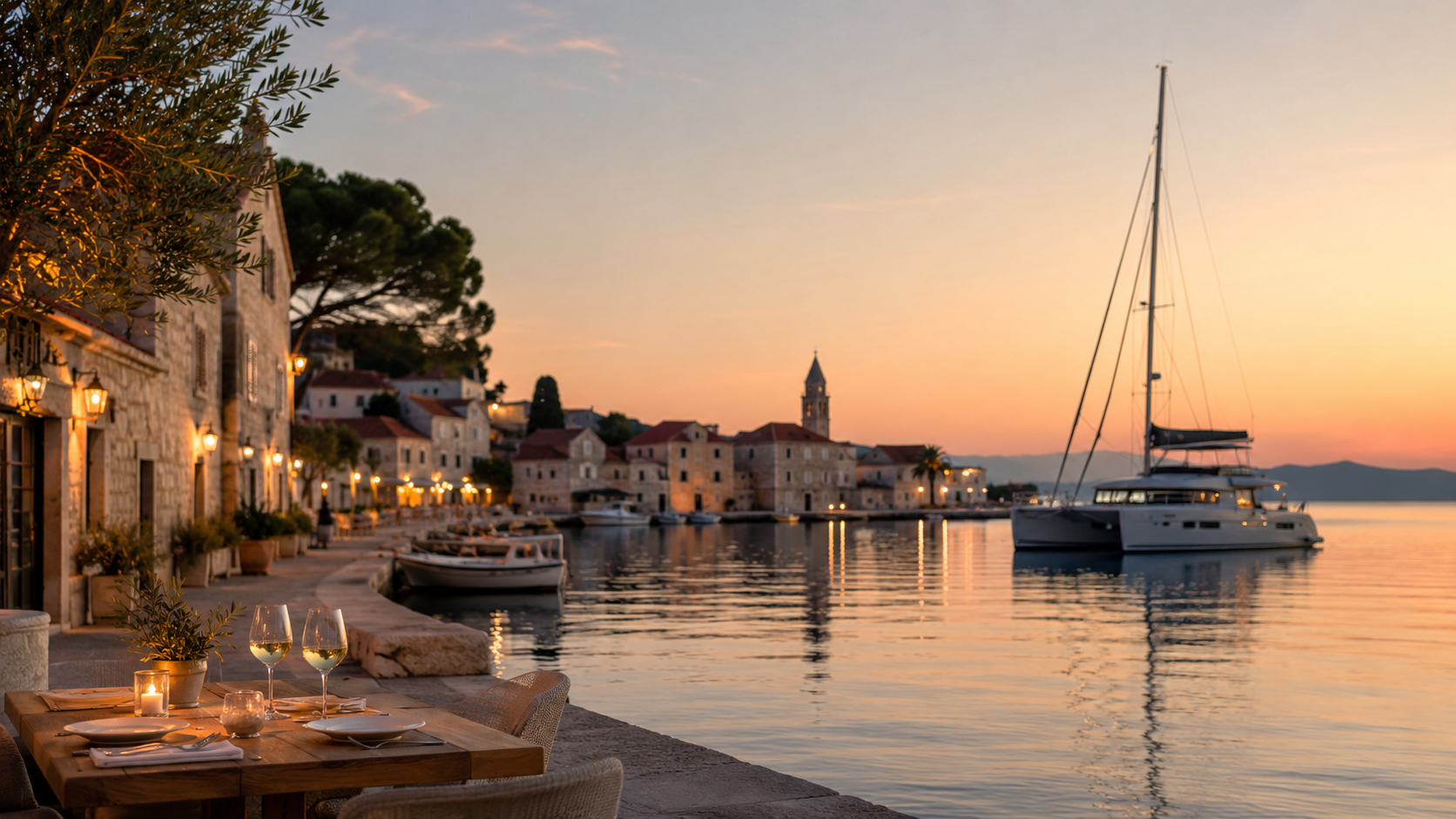
As evening settles over the Adriatic, Croatia’s food, wine and island culture come gently to life.
Continue Exploring Croatia
Discover more Elysian Insights on sailing the coastlines, islands, culture and cuisine of Croatia.
Croatia Ashore | Food, Wine & Island Culture (this Insight)