
Dining Ashore When Sailing the Greek Islands
Waterfront Tavernas, Island Wine and Soft Aegean Evenings
Dining ashore is one of the quiet pleasures of sailing through the Greek Islands.
After a day shaped by clear water, harbour arrivals and time on board, the evening often unfolds naturally on land — a table close to the water, warm bread, olive oil, grilled fish, local wine and the gentle rhythm of island life.
For guests travelling by private yacht, restaurants are not simply places to eat. They become part of the journey: a way to experience each island through its harbour, produce, hospitality and atmosphere.
This guide is not intended as a fixed restaurant list. Instead, it offers a refined way to think about dining ashore while sailing the Greek Islands — from relaxed tavernas and waterfront terraces to more polished island restaurants where food, setting and mood come together beautifully.
The Pleasure of the Harbour Taverna
The harbour taverna remains one of the great joys of Greek island travel.
At its best, it is simple, generous and unforced. Fresh fish, grilled octopus, Greek salad, courgette fritters, fava, local cheese, warm bread, olive oil, lamb, vegetables and house wine all appear naturally on the table.
The setting often matters as much as the menu. A good taverna may sit directly beside the quay, with fishing boats close by, masts moving gently in the evening air and harbour lights beginning to reflect on the water.
For Elysian guests, these meals are not treated as an afterthought. A well-chosen taverna can become one of the most memorable moments of the week — especially when it follows a relaxed day at sea and the evening is allowed to unfold without hurry.
Waterfront Dining, Without the Fuss
Waterfront dining in Greece can range from rustic to quietly sophisticated.
The best experiences are rarely the most elaborate. Often, they are the places where the food feels confident, the service is warm and the view does not need to compete for attention.
A good evening might mean grilled sea bream beside the quay, a mezze table overlooking a small bay, or a shaded terrace where lunch stretches gently into the afternoon.
This suits the Elysian approach perfectly: not showy fine dining every night, but carefully chosen meals that feel local, relaxed and quietly special.
What to Look For
A good Greek island restaurant does not always announce itself loudly.
Look for places where the menu reflects the island, where local ingredients appear naturally, and where the setting feels connected to the harbour, village or shoreline.
The most rewarding meals often come from simple signs: fresh fish displayed with confidence, seasonal vegetables, local cheese, handwritten specials, island wine, and a terrace that feels settled rather than staged.
For sailing guests, location also matters. A restaurant close to the quay, anchorage or harbour keeps the evening easy and unforced. After a day on the water, the best dinner is often one that feels close, natural and beautifully timed.
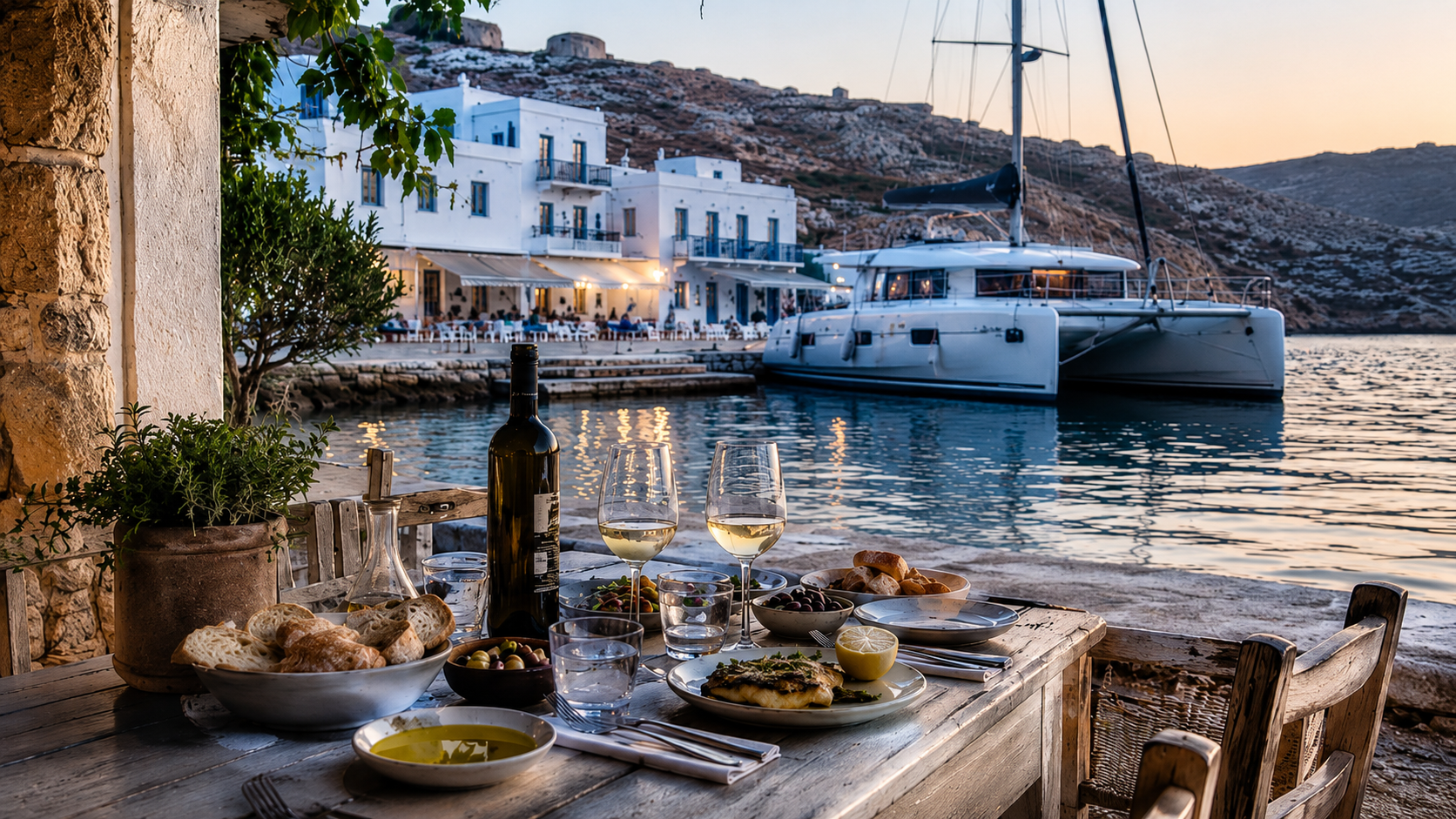
The best island meals are often the simplest: fresh seafood, local wine, warm bread and a table close to the water.
Ionian Dining: Gentle, Generous and Relaxed
In the Ionian Islands, dining tends to feel gentle and welcoming.
Kefalonia, Ithaca, Lefkada, Corfu and the surrounding islands offer green landscapes, sheltered harbours and a food culture that often feels generous and homely.
Expect seafood, local cheeses, savoury pies, slow-cooked meat dishes, olive oil, wine and relaxed waterfront tavernas. The Ionian is particularly well suited to guests who enjoy softer sailing days followed by easy evenings ashore.
This is dining with very little theatre — just good food, pretty harbours and a mellow island rhythm.
Saronic Dining: Refined Island Evenings
The Saronic Islands bring a slightly more polished atmosphere.
Hydra, Spetses, Poros and Aegina combine historic harbour settings with restaurants that can feel elegant without becoming formal.
Hydra, in particular, has a distinctive evening character. Its stone mansions, car-free lanes and graceful harbour create a setting where dinner ashore can feel quietly cinematic. The food may be simple, but the atmosphere gives the evening a special quality.
For guests beginning near Athens, the Saronic offers one of the most accessible ways to combine culture, sailing and refined island dining.
Cycladic Dining: Simplicity, Light and Local Character
The Cyclades bring a different mood: brighter, drier and more elemental.
Food here often reflects the landscape — tomatoes, capers, herbs, cheeses, pulses, seafood, wild greens and simple dishes shaped by sun, wind and island tradition.
Syros brings a more urban and neoclassical character, while other Cycladic islands offer fishing harbours, hilltop villages and small tavernas where local produce remains central.
Restaurants in the Cyclades can range from informal harbour tables to refined island dining rooms. The best retain a sense of place: clear flavours, local ingredients, simple presentation and beautiful evening light.
Dodecanese Dining: Eastern Aegean Flavours
Kos and the Dodecanese offer a more easterly expression of Greek island dining.
Close to the Turkish coast, the region has absorbed layers of influence over time, and this can be felt in both its food and architecture. The result is a dining culture that remains recognisably Greek, but with a slightly different character.
Across the islands, guests may find grilled seafood, herbs, local cheeses, honey, slow-cooked dishes, traditional sweets and wines shaped by the warmth of the eastern Aegean.
Kos, Rhodes, Symi, Nisiros, Tilos and Halki each bring their own rhythm — from colourful harbours and medieval towns to quieter waterfronts where dinner feels closely tied to island life.
For guests who enjoy variety, the Dodecanese can be especially rewarding: historic settings, distinctive flavours and evenings that feel a little more layered.
Local Wine, Long Lunches and Evening Light
Dining ashore is not only about dinner.
A long lunch after a swim, a glass of local wine in a shaded square, coffee beside the harbour, or a simple plate of fruit and cheese can all become part of the experience.
This flexibility is one of the pleasures of a private yacht itinerary. Some days may call for a special restaurant ashore. Others may be better suited to a simple lunch on board and an easy taverna in the evening.
The key is not to over-plan every meal. The best dining moments often happen when there is enough structure to guide the experience, but enough freedom to follow the mood of the day.
How Elysian Approaches Dining Ashore
Elysian’s approach to dining in the Greek Islands is guided rather than rigid.
Where appropriate, we can suggest tavernas, waterfront restaurants and dining experiences that suit the route, the season and the character of the journey.
The aim is not to chase the most fashionable table. It is to find places that feel right: local, atmospheric, relaxed and quietly memorable.
Some evenings may be simple and informal. Others may be more refined. Across the week, the balance should feel natural — just as the sailing itself moves between quiet anchorages, harbour towns and cultural stops ashore.
Final Reflection
The best meals in the Greek Islands are not always the most polished or the most publicised.
Often, they are the places that feel rooted in their setting: a harbour taverna with fresh fish, a family-run terrace above the water, a village restaurant serving local dishes, or a quietly elegant waterfront table at sunset.
For guests sailing with Elysian, dining ashore becomes part of the whole journey — another way to experience the islands, their hospitality and their timeless connection between sea, food and place.
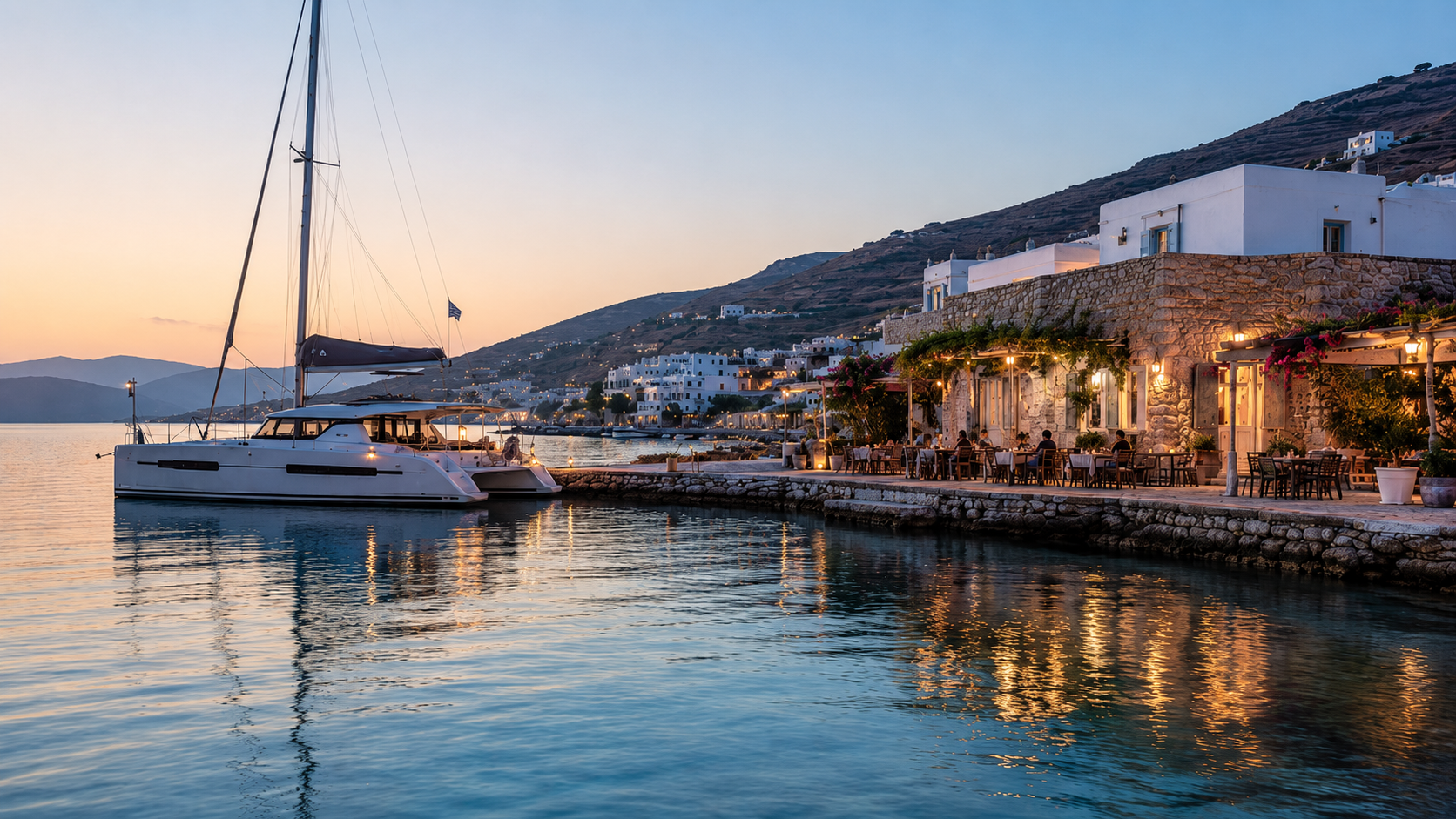
As evening settles over the harbour, dining ashore becomes part of the sailing journey itself.
Continue Exploring the Greek Islands
Discover more Elysian Insights on sailing the Greek Islands, culture and cuisine.
Dining Ashore When Sailing the Greek Islands (this Insight)